*Please note that this is part 2 of a 3-part series. Part 3 is on Icaros, and Part 1 is on Curanderismo (The traditional animist healing arts).
Plant Dieta is the practice found at the heart of Amazonian curanderismo and, without a doubt, one of the most precious and invaluable aspects of my training. How the practice is undertaken varies within each lineage. What I discuss here is based on what I learned during a year of sitting in dieta with various teachers from different traditions, before settling into a four-year full-time apprenticeship within the Mahua-Lopez lineage of the Shipibo tradition of curanderismo. I have then undergone another decade of Dieta within a non-traditional context and have adapted my practice as needed. I always strive to keep to the essential tenets of the tradition while also evolving, integrating and transforming parts of it to meet the conditions I find myself in outside of the Peruvian Amazon.
What Plant Dieta isn’t:
Before I describe what a Plant Dieta is, I will say what it isn’t, since there is a lot of confusion on the topic.
Dieta is not to be confused with the ‘Ayahuasca Diet’, which is a set of dietary and behavioural restrictions that most facilitators recommend participants adhere to before sitting in ceremony with Ayahuasca. These restrictions typically include: no salt, no oil, no sugar, no spices, no meat, no drugs or alcohol, and no sex or self-pleasure for a few days/weeks leading up to the ceremony. This is said to support the body physically and energetically receiving the medicine.
Dieta is also not to be confused with the ‘Healing Diet’ which is a similar set of restrictions to the ‘Ayahuasca diet’, and is typically recommended when a patient is taking a prescribed, non-psychoactive herbal medicine preparation, such as a tincture or decoction, with the intention of healing from a particular condition. In this case, the ‘healing diet’ protocol is followed the entire time the medicine is being administered.
Master Plant Dieta:
To distinguish Plant Dieta from the two categories above, the term ‘Master Plant Dieta’ is now often used by Westerners, although I’ve never heard it called anything other than “dieta” by my Shipibo teachers.
Dieta is the backbone of Amazonian curanderismo. Within my tradition of study, Dieta is typically only undertaken by curanderos and serious students within that tradition. It is considered the pathway to becoming a curandero, a doctor of the plants, and requires dedication, commitment, and, often, sacrifice.
In traditional curanderismo, it is not only the person doing the ‘doctoring’, it is their partnership with the animate forces of nature, most commonly plants, but also the ancestors, elementals and deities in a dance with the healing intelligence of the patient. While the curandero may have extensive knowledge in preparing and administering herbal medicines and skill in other healing practices, it is their ability to enter into altered states and to partner with these forces that then guides their practice and lends whatever healing modalities they are using their potency. No matter what form of Amazonian curanderismo we speak of, the practice of dieta is where these energetic working relationships are formed, the sonic vocabulary is built, the skill in invocation is honed, icaros received, wisdom gained, intuitive perception strengthened, sensitivity increased, and healing power attained.
It is also used to give protection and defences, purify and clear our physical and energetic obstructions that might prevent this partnership from forming and cleanse and renew one’s energy after working intensively with patients.
“The plants sing and speak to you if you listen to them with respect, and they allow you to see by way of visions and dreams.” In the Amazonian societies under study, we observed that during the traditional medicine apprenticeship, the initiates dedicate a fundamental part of the process to developing the capacity to “see”, establishing contact with the spirit world. This capacity to see is an aspect of extreme importance in shamanic traditions. Thus, it is not surprising that apprentices invest considerable time, resources, and effort in developing it. In the Peruvian east-central Amazon region the most important way to acquire this capacity is through shamanic diets.” -Elsevier (Journal of Ethno-Pharmacology)
Essentially, it is a practice of relating, where we create a container and the accompanying conditions to begin forming a bond with specific members of the other-than-human community, most commonly plants, although it could also be with, what we in the cultural West may consider ‘inanimate’ beings such as bones or stones.
Master Plant Dieta is very often confused with the ‘Healing Diet’ as they appear to be similar on the outside. Both involve dietary and behavioural restrictions (although Master Plant Dieta is typically done in isolation while healing diets are more commonly social), both involve the consumption of plant preparations (sometimes even the same “master” plants), both can result in connections and communications with the animate intelligence of the plants being imbibed and both can result in personal healing.
The key difference is that with the Healing Diet, you are inviting the healing force of the plant to work upon you, and once your treatment is complete, you move on with life, hopefully in gratitude for the healing you received. There are no contracts or ongoing commitments with the plant in question.
In a Master Plant Dieta, you are inviting the animate intelligence of the plant to make a permanent bond with you energetically/ spiritually. You are endeavouring to become a hybridised plant-human, which requires you to make a commitment to tend this bond for the rest of your life in exchange for certain healing, guardianship, and seer-ship powers within your role as a curandero.
The energetic difference is significant and is a commitment that should not be undertaken lightly. Each plant has its own conditions for that bond to be made, and conditions of upkeep. Breaking those conditions can have serious consequences, such as causing health issues, interpersonal chaos, or affecting your ceremonial “sight” and your capacity to enter effectively into the “mareacion” or altered state required to do the ceremonial work.
If you aren’t planning to enter into the long, arduous journey to become a curandero, I would not personally recommend undertaking a Dieta. There are plenty of less risky ways to develop beautiful relationships with the plants, ways that are normative to all traditional people.
How Plant Dieta is undertaken: Preparing the vessel:
Again, this description is according to the process I learned within my lineage of study and, therefore, may differ from the guidance of other teachers or traditions. I am also being intentionally vague in some of my descriptions as I believe that true dietas should not be undertaken without guidance in the beginning.
1) At the beginning of this journey, it is common for the dietero’s (the person undertaking the dieta) teacher to choose the specific plants they will be dieting with. The plants chosen will usually depend on their assessment of what spiritual/ energetic qualities and support you need to further your training. Later on in the journey, you will choose your own plants through direct knowing or because a specific plant chooses you, often within dreams or ceremonies. Once the plant is determined, we then figure out which part of the plant we will be dieting with, since roots, bark (inner or outer), leaves, flowers and fruits all have different qualities.
**It’s important to note that while all plants have animate intelligence and the potential to connect with us, not all are open or interested in it. In fact, some are considered dangerous to work with or are reserved for only advanced students. The term “master plant” is usually used for specific plants that are known for being open to bonding with and being in a teaching relationship with humans **
2) Then you or your teacher will decide on a period you will undertake this Dieta for. The usual timeframe is anywhere from 5 days to 6 months. I would say 2-6 weeks is most typical these days. My teachers have shared stories of the old masters undertaking specific Dietas for years at a time, but that is very rare now.
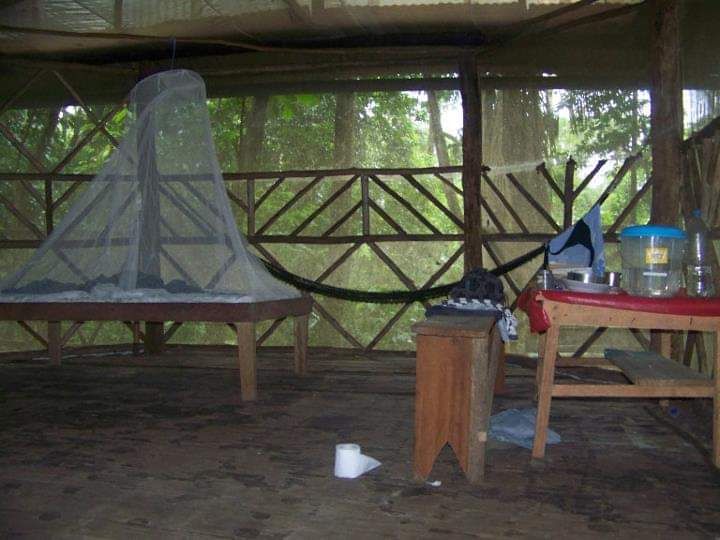
3) You then head to an ideally quiet and wildish place, where you can live in isolation for the duration of the Dieta. In our tradition, this is usually a “tambo” or hut in the jungle, away from the centre of the village or other kinds of human activity. The process of Dieta is very vulnerable on both ends. It requires an extraordinary amount of openness, sensitivity, and attentiveness for it to be successful. It’s also very vulnerable to disturbing energies such as strong emotions from interpersonal conflict, sexual attractions, jealousy, etc. Our teachers also say that the “scent” of menstrual blood or semen on other people can disturb the dieta.
It also asks us to become something other-than-human for a time, to stretch beyond our habitual identity that is constellated through conversation… for these reasons and many more, social interactions can really disturb this process.
“To learn to see, to learn to hear, you must do this – go into the wilderness alone. For it is not I who can teach you the ways of gods. Such things are learned only in solitude” Don Jose Matsuwa
Having said that, some people will continue to interact with their teachers, fellow students who are also undergoing Dieta, or with the people who bring their food. This is more common during learning dietas at the beginning of the apprenticeship journey and can be supportive IF those interactions are properly contained.
** With the recent spread of these traditions around the world and the concept of dieta “trending” we are now seeing adaptations of the traditional Dieta format to what is often called “soft diets” where you remain engaged with regular life to a degree eg. work, study, family life while simultaneously engaging in a Plant Dieta. This differs significantly from traditional practice, which almost always involves isolation and is not something I would ever recommend.
“Plant Attunement” is a term I use to describe a more gentle practice that doesn’t involve the same bond, commitment or risk as a Dieta and is a way to connect with the plants in a social or family setting. I believe most people offering “soft or social” Dietas are actually offering “Plant Attunements,” which I’m in full support of! Westerners need lots more attunement, I would just like to see more care taken with the term ‘Dieta’, which is a very specific practice, with a very particular energetic outcome and can have serious consequences if broken or damaged.**
4) You then prepare your dieta plant (or your teacher will do that for you in the beginning). This may involve prayers, icaros, and offerings made to the living plant before harvesting the parts you intend to Diet with. In my lineage, we typically prepare an extraction of the specific plant parts along with some tobacco to help facilitate the connection. There are then specific rituals undertaken and icaros sung by either the teacher or yourself that are used to ‘open’ your Dieta and to ‘protect’ you while this very vulnerable process is taking place. A key part of opening the dieta involves making explicit agreements regarding the timeframe and the particular sacrificial restraints you are undertaking. You will be expected to hold true to your agreements or risk “breaking” the dieta, which can have serious energetic consequences. This is often done in an ayahuasca ceremony, but many folks diet without participating in Ayahuasca ceremonies. It is not seen as essential for the dieta process.

5) In our lineage, we typically ingest a purgative before commencing the Dieta. We may also do a series of medicinal steam baths with particular plants that also function to cleanse and clear us of “malos aires” (bad airs), both the purgative and the steams help to clear obstructive energies and open the way for the work to begin. We then typically enter into a period of fasting from food for a minimum of two days, during which time the only thing you are ingesting other than water, is the preparation of the plant you are choosing to connect with. Fasting is a very effective way to shift out of day-to-day “citizen mode” and facilitate the opening of one’s sensory gates. It’s also part of the energetic “sacrifice” required to signal the seriousness of your intention to make this bond.
6) After 2-5 days, the dietero begins eating again, but only the blandest foods with no oil, salt, sugar, dairy, spices, or meat except certain types of fish. This allows the body to become very open and sensitive. The idea is that strongly flavoured foods can be ‘loud’ and may mask the subtle consciousness and communications of the plant you are attempting to connect with. Sticking to bland foods is also seen as another aspect of the sacrifice that helps one to enter into a state of deep listening and receptivity and to demonstrate the strength of your intention. Sometimes, you only drink the plant preparation during the fast in the beginning, and at other times, it is drunk daily throughout the entire Dieta.
You may also want/be required to fast from cosmetics, electronics, or anything else to which you feel very attached or addicted, anything that may cause distraction from the purpose of connection.
7) It is important to refrain from having intercourse or masturbating during a dieta. The opinions as to why this is are many and varied. Similar to the bland food, many consider it a key part of the ‘sacrificial’ agreements you enter into to demonstrate your commitment to the being you are attempting to partner with. Some say the outward expression of sexual energy can damage the very sensitive energetics of the Dieta bond that is attempting form. Others say sex/ masturbating can distract from the plants’ communications and may cause externalisation of focus when your full attention is required for the Dieta bond to take place. And, some even say it is because plants are jealous. It may be some or all of the above, but we also tend to look at it from a Taoist or Tantric perspective, where orgasm is a dispersal of potent libidic energy that can be sublimated towards the spiritual bond you are attempting to make. It is not uncommon for one’s libido and desire to increase during the Dieta process. Our teachers would often say that the plants test our commitment by sending us tests and challenges, and that refraining from sexual connection and release is one of them.
8) If you are undertaking this process under the guidance of a teacher (which i would strongly recommend in the beginning), it is common for them to energetically ‘open’, ‘facilitate’, ‘protect’ and ‘close’ your dieta with the use of certain icaros during ayahuasca ceremonies. If your teacher has undergone Dieta with the same plant you are intending to diet with, then it is also possible for them to ‘introduce’ you to the plant in question and help to facilitate a stronger and deeper connection through a process similar to energetic ‘transmission’ used by many spiritual teachers of other traditions. Again, this often happens within an ayahuasca ceremony but can also happen outside of ceremony.
9) It is important that dietero spend time consciously cultivating this dieta relationship throughout the day via prayer, specific plant communication practices, meditation, writing, singing, art, dream communication and just spending long hours sitting with the plant in place. The more time spent directing our devotional attention and affection towards the plant we are dieting with, the greater the chance that a successful bond will be made. This is also done by sitting in Ayahuasca ceremony during the Dieta.
10) In our lineage, when your dieta is complete, you end it through various rituals that function to energetically signal the end of the Dieta. You then offer up prayers of gratitude and then ‘seal and guard’ it with the use of a very powerful type of Icaro called an ‘Arkana’. The Arkana is a kind of protective shield that is woven over the very sensitive new energetic rootlets that have developed through the dieta process. Dietas are incredibly vulnerable to being disturbed, damaged, or broken, especially in the initial days and weeks of re-entering into society and family life.
11) It is then common to undergo what is called a ‘post-dieta’, a series of dietary and behavioural observances to protect this new energetic partnership while you integrate back into the world. It also functions to reaffirm your continued commitment to nurturing this relationship going forward. The dietary and behavioural restraints will vary from plant to plant, person to person, but pork is a strong taboo in this tradition, and it is expected that you will never ingest it again once you have begun the path of dieting with plants.
*As far as I am aware, Mestizo traditions do not use the plate of onions/chill and an Arkana to close the dieta and as a result, usually have a much stronger emphasis on ‘post-dieta’*
Planting and nurturing the seeds of your Dieta (the practice):
Dieta, like prayer, is sacred, unique to each plant-human relationship, and private. Nevertheless, I want to give a few examples of practices I have personally used to deepen the process of Dieta. Keep in mind as you read that whatever practices you do, the dieta should always be guided by deeply listening to the plant with which you are making this connection; this will make the relationship spontaneous, intimate and in alignment with their will for this unfolding relationship.
I typically use a practice I learned from the world-renowned herbalist, Stephen Harrod Buhner, called ‘The Exact Sensory Imagination’:
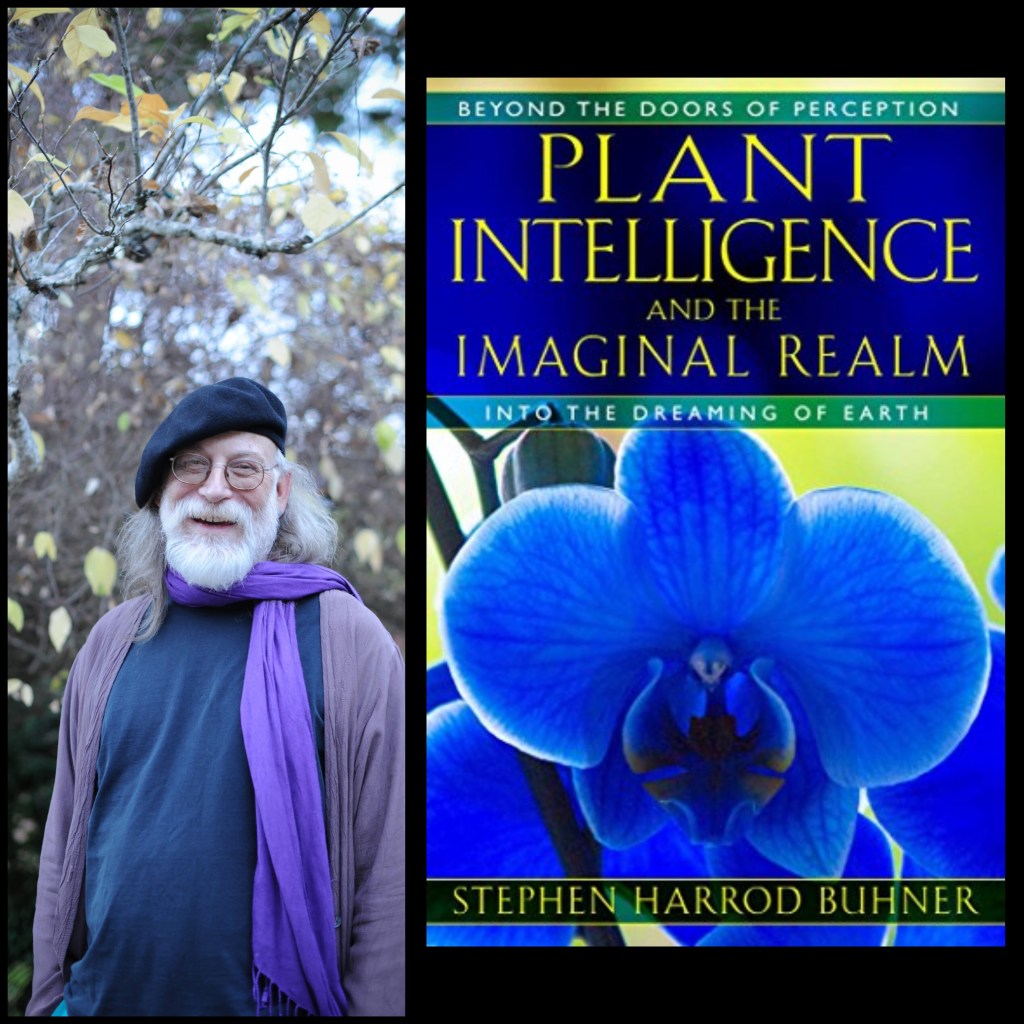
This involves sitting with the plant itself and allowing our sensory impressions of its body to touch us. With the utmost respect, slow, deep breaths, and a soft focus… we ask permission to connect, wait a moment to feel a yes/no in our bodies, and then proceed if consent is felt.
We then make an offering to the plant, such as pouring water, leaving some tobacco or a precious item, or singing icaros and praising them out loud. Something to signify the sincerity of our intention in making this relationship. We then look closely at them, studying their colour and shape, we notice the environment around them, we taste them, feel them, smell them… bathing in them with all our senses until we feel a sense of conscious intermingling. We now draw attention to our feeling-sense impressions and how our systems are responding to those impressions.
In this way, we begin ‘entraining’ our consciousness to that of the plant. Our heart begins to open, and an exchange starts to take place. Dropping through the senses and down into the heart, the hidden inner dimensions of this plant begin to reveal themselves within the imaginal “mind’s eye”. I will typically then begin to interact and communicate with the plant via the Imaginal Realm. Occasionally, I will drum or rattle to help facilitate this journey; at other times, it just unfolds spontaneously or after some singing, chanting or connected breathing.
~•~
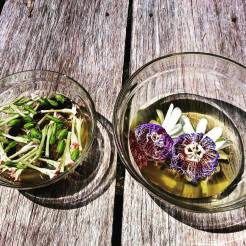
Another practice is to place leaves or flowers of the plant on the various pulse points on the body and then consciously breathe its essence into the tissues and organs of the body. We then place one leaf/flower in water to infuse and then drink, one on our tongue (as long as it isn’t toxic) and the other under our pillow while we sleep with prayers for dream connection. We then pay close attention to our dreams, which are pretty much always expressing the condition of the dieta and can be a strong channel for this relationship to be built.
~•~
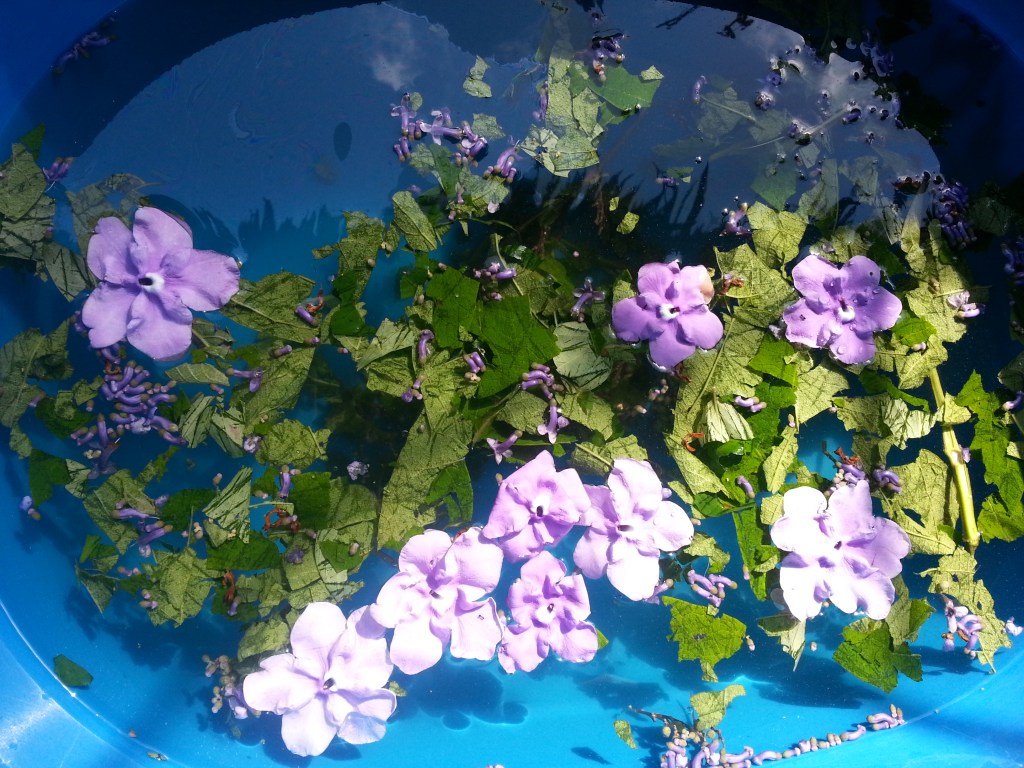
I often make baths with the plant I am dieting with (as long as it’s not toxic). Ritual bathing is a big part of my tradition, and different baths are created for all kinds of purposes. This kind of bath just feels like another gentle and beautiful way to take in the plant being dieted.
~•~
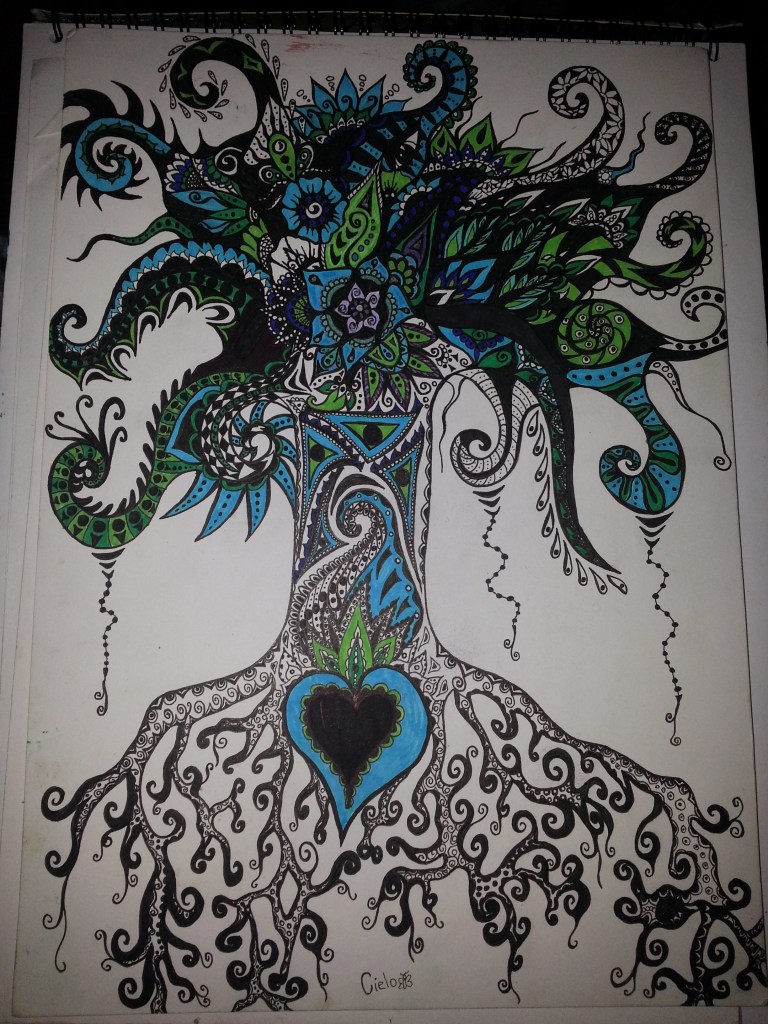
Other practices we have used are shamanic drum journeys to meet with the animate intelligence of the plant, dream incubation practices, connecting in ayahuasca/plant medicine ceremonies, writing songs and poems of devotion to the plant, journaling and stream-of-thought writing practices, making art to express the connection being made, letting the plant move your body in spontaneous ways, tea ceremony with a water extract of the plant, prayer, and simply sitting.
Heart resonance and the dreams of the soul
All of these practices are done to help us to deepen empathy, devotion, and kinship with the plant. To open our sensory gates more widely, allowing us to become more sensitive to its subtle communication, and bringing us into resonance. As this resonant connection deepens, we begin to flow with its patterns and absorb the meanings and communications that are embedded in the gestalt sensory experience of it. This input then begins to blossom into our awareness through dreams, metaphors, omens and synchronicities, song, poetry, ceremonial visions, and direct knowing. Dreams, in particular, are a strong doorway through which these relationships are forged. Many Westerners associate dietas with Ayahuasca ceremonies, but traditionally, the connection to your dieta can be assessed and expressed entirely through dreams.
Cultivating Awareness
Similar to object concentration meditations such as Vipassana or Anapana, I practise sitting meditation with our dieta as the “object” of our attention or concentration. I have found that this can really help to quieten and clarify the mind and increase its ability to ‘hear’ the plant you are dieting with, while also functioning as a way to build the general the awareness necessary to hold intense experiences (the beautiful and the horrible) and to integrate wisdom and insight arriving through the dieta process.
A few words of caution:
Shitana:
Many Westerners who are new to this work often conceive of plant “spirits” in a very one-dimensional way. There is an assumption that all plants have our best interests at heart. They may have a hard time imagining that harm may come to them through this process.
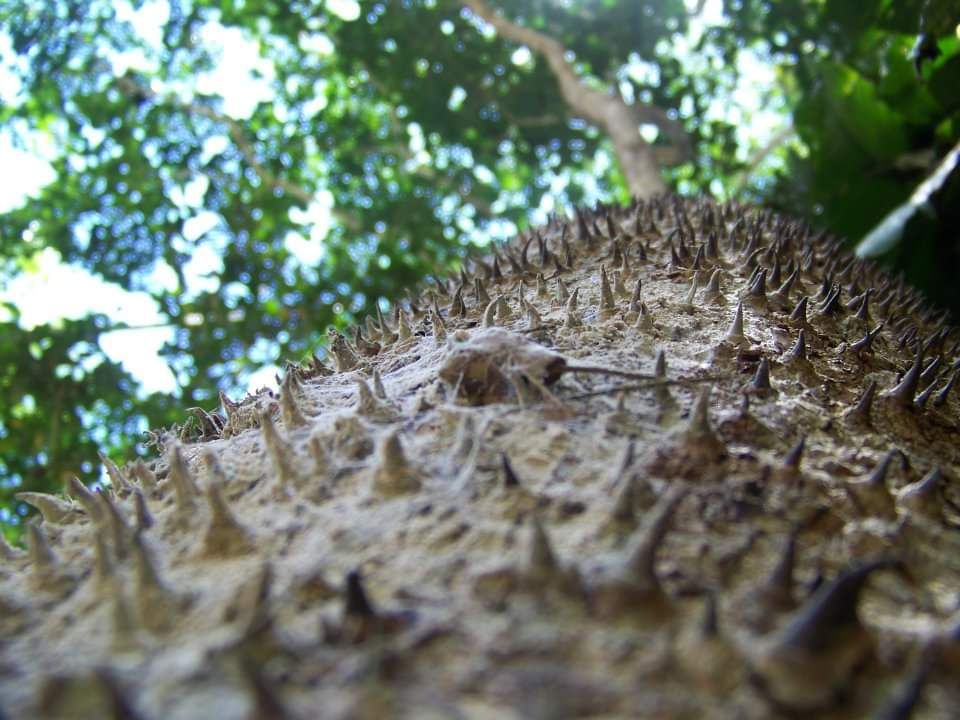
Well, it’s a lot more nuanced according to my Shipibo maestros. They taught us that most plants have both light and dark aspects. The dark aspect is known as “Shitana”, which can also be considered the “defensive energy” of the plant. Most plants have Shitana, but some have a lot more than others… particularly those plants with thorns or that are poisonous. Shitana tends to accumulate in our energetic bodies during the dieta process and has the potential to corrupt your medicine. Usually, at the beginning of the learning journey, your teacher will help to clear accumulated Shitana, but over time, students must learn to recognise and clear it on their own. Students can also learn to use this energy consciously in defence, but this is an advanced practice that can take many years.
Accumulated Shitana is seductive. It feels powerful and can lead people astray without them realising (often leading them to feel they are more advanced in this work than they actually are). It is also one of the ways that well-meaning students can end up doing Brujeria (black magic) unintentionally. You can think of Shitana as a “dark power” that may feel good to wield. Some of the ways that Shitana may show up is in the form of anger, envy, or thoughts of revenge towards another person or dreams/visions of doing violence to others
There are certain plants or trees, such as Toe, Lupuna and Ayahuma, that are generally avoided by beginners in my lineage, as their Shitana is considered too strong for most dietero to resist early on in their apprenticeship. Paradoxically, these plants can also provide strong, energetic defences and are often dieted for protection from the same kinds of trouble they can cause. They also offer strong healing and seer-ship gifts, but the price can be high. In my tradition, we favour dieting with “lighter” plants early on in the journey and perhaps forever. There are only a handful of plants considered to be free of Shitana.
Tests:
Our maestros believe that the plants will often pose tests to grow our capacity and potency as healers. Plants can be tricksters that cause trouble in service of something larger. It’s part of the journey to learn to recognise when we are being tested and to rise to the challenge.
Crossed and/or Broken Dieta:
As I mentioned above, the Dieta process is considered very sensitive and is vulnerable to being crossed or broken. This is especially true while it’s in the process of being formed (during the Dieta) or in the tender weeks of stabilisation after the official Dieta container is closed. For this reason, there are many guidelines, restrictions to observe, and lifelong taboos to adhere to. It’s also why isolation and silence are advised.
The consequences for a broken or crossed dieta will vary from plant to plant, person to person. Essentially, if you made a strong bond, then the consequences for the disturbance will also be stronger. Typically, those just starting out on this journey will get off lighter than those further along the path.
There is no exact science here; what might disturb one dieta will be fine for another. Each Dieta will come with its own requirements for being both made and maintained. Some of the ways to break a dieta are to explicitly go against the agreements of the container, like having sex, drinking alcohol or eating a ham sandwich.
Some of the more subtle ways to cross a dieta would be having a fight with someone during your dieta. Eating something you thought was okay but actually wasn’t (the wrong kind of fish, for example) or unintentionally being in the presence of someone with menstrual blood or semen on them. You may also cross a dieta by interacting with another plant that’s incompatible with your existing Dieta (weed is an example of a plant seen to be incompatible with many dietas).
If a Dieta has been broken, the fix is generally to resit the dieta for double the length of time of the original dieta and to do it very well this time around.
A crossed dieta usually requires the assistance of a skilled teacher to repair and straighten, usually in ceremony. It’s also a skill that an advanced student will learn to do for their own dietas. Sometimes, reparatory actions will need to be taken or amendments made. What those are exactly will depend on the communications received directly from Dieta. Other times, being energetically straightened in ceremony is all that is required.
In my tradition, we always sing an Arkana Icaro to end a plant dieta. An Arkana is like a kind of energetic shield or protective frequency that’s woven around you and seals in the new and sensitive plant frequencies you have gained through your dieta while they stabilise in your field.
The Arkana makes unintentionally crossing the dieta less likely, although it definitely still happens.
Joining Dietas:
When dieting with lots of different plants, there can be incompatibilities that cause a lot of energetic disharmony. Sometimes, there is nothing that can be done, and you just need to choose and commit to a particular plant or family of plants that are resonant with each other.
In other cases, Dietas can be skillfully joined together in the ceremony and encouraged to work in synchrony with each other. Again, this is typically done by a curandero with a lot of skill and knowledge in this area and is eventually something students will learn to do for themselves. It’s important to note that more is not always better in this tradition. I know many practitioners who have chosen to dedicate themselves to one or a handful of plants and repeatedly dieta with these.
Stolen Dietas:
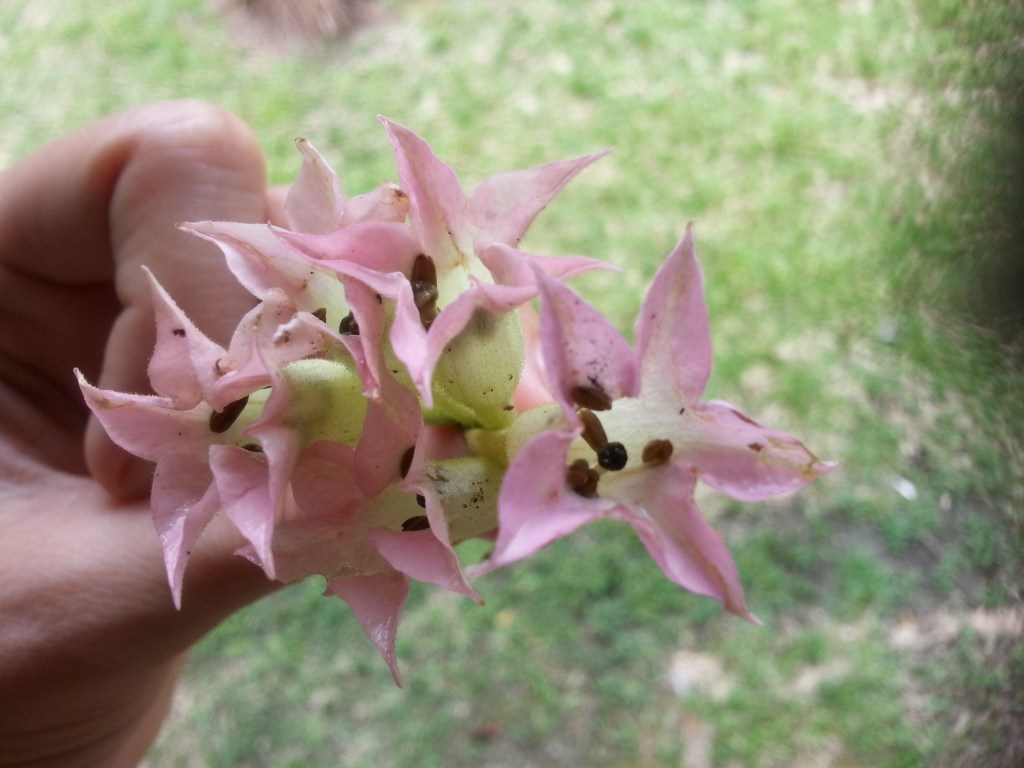
In my tradition, it is considered possible for another advanced practitioner, typically a Brujo, to steal someone’s dietas for themselves. This is rare and devastating and can have awful consequences, such as a complete lack of power and connection in the ceremony, and a feeling of being “in the dark”, so to speak. We were always cautioned to be careful of who we sit in ceremony with for this reason. It’s tricky because symptomatically, the experience of having your dietas stolen can look and feel similar to a broken or crossed dieta. I have seen Westerners who are suffering from a broken dieta due to their own actions want to avoid responsibility and blame others for stealing from them. A skilled and trusted teacher should be able to easily discern the difference in ceremony and advise on the next steps.
The Fruit (function) of Plant Dieta:
Each plant brings different gifts, teachings, and energetic qualities. For example, some plants are dieted to gain strong energetic defences, some are particularly good for supporting connection to celestial or high-frequency healing forces, some have strong cleansing and clearing properties, and others will have very specific doctoring qualities… but just like it’s reductionistic in herbalism to say “tumeric is good for inflammation and echinacea is good for the immune system”, it is likewise simplistic to say “Catahua I’d good for protection and Bobinsana is good love and heart stuff”. This is a very Western way to look at the plants. While there are clear qualities that each plant has the potential to offer up, the specifics of what arises during a dieta will depend entirely on your particular relationship with that plant and may look quite different from person to person. The relationship and the specific qualities or connections that emerge can be seen as an emergent property between the Dietero and the plant; each person may reveal or see a different facet of this plant’s potentiality during their dieta.
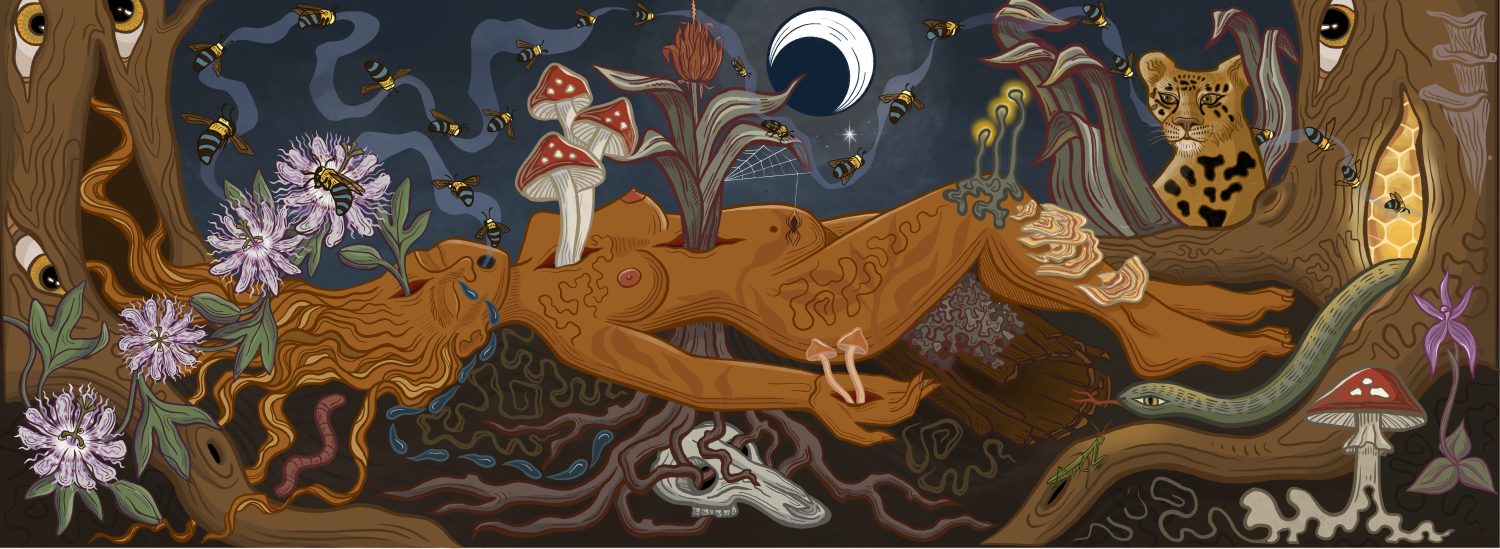
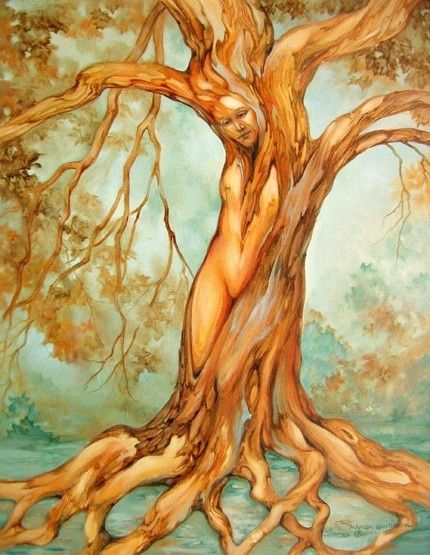
Essentially, when you create the container mentioned above, you are cultivating a healthy environment or soil in which the energetic root system of your plant dieta can begin to grow. Then, by entering into the various practices I described, you are actively watering and feeding the dieta and increasing the chances of it developing a strong root system within your own psycho-energetic body. You become a hybrid. My teachers say that if you follow this path properly, you eventually become more plant than human, and that can be clearly seen in ceremony. The patterns of your energetic body change for good after a successful dieta.
It also means that you can now access the “world” ot “mandala” of that plant within the mareacion. For example, a successful Noya Rao dieta can lead you to being able to enter into a world that contains luminescent celestial cities full of beings, particular animals associated with Noya Rao, it has its own moons, its own “world tree” that is also populated with countless beings, it’s own rivers and underwater cities and it’s own fierce guardians etc.
Like most people have intimate partnerships, your inner circle of friends and family, good friends and then acquaintances, etc., so it can be with the plants. Each curandero will have their primary partnerships, secondary and then still other plants with whom they feel affection and work within specific situations, but only when necessary.
Energetic plant pathways, Icaros and invoking the animate forces
How developed this root system will vary greatly from person to person, plant to plant. You can choose to do a dieta repeatedly with one plant for your entire life and create a very deep and developed “old-growth” root system within you, or you can choose to do dietas with many different plants or sometimes both at different times on your path.
Some examples of more single-focused commitment would be a tobaquero who diets mainly with tobacco, a sananguero who diets mainly with the sanango family of plants or our teachers who work primarily with a bio-luminescent tree called Noya Rao and other energetically resonant plants such as Bobinsana and the Lotus family. Taking the example of Noya Rao again, you can spend the rest of your life exploring the world/mandala of Noya Rao, making strong relationships with the many beings contained within its sphere. Many lifetimes would not be enough to know them all.
These qualities are then invoked through icaros in the ceremony (this is covered in depth in part 3 of this series). It is the quality and strength of connection to the animate healing and protective forces, cultivated through this practice of plant dieta that gives the Icaros (medicine songs) their power or ‘spiritual resonance’, that gives the curandero his ability to diagnose or ‘see into’ his patients, that guides a curandero in crafting his patient’s treatments, that helps to ‘activate’ or give potency to the various medicines given and that allows a curandero to defend effectively against energetic ‘attacks’. There are some plants, such as Noya Rao, that are said to offer many of these gifts or qualities in one.
Shedding and Self-Awareness
In addition to the traditional focus of dieta, I have found many other levels of medicine in this process. Each time I enter into this practice, I pass through states of intense discomfort in the beginning as I begin purging gross and heavy elements from my system. It is common to feel weak and resistant at these times, and a lot of patterns and emotions that were being suppressed with food and distraction now begin floating into my conscious awareness. Though not a typical focus of the traditional dieta practice, I relish this part of the process as an opportunity to deepen my self-awareness and shed light on unconscious habits that have been keeping me stuck in various ways, although it’s not glamorous.
“It is in these lonely places that the sacred mysteries, which infuse all, yet are visible to none, can find their way into the human mind” –Joan Halifax
Touching the Mystery – The non-traditional focus on Eco Awakening and Non-Dual Realisation
The isolation, fasting, and intentional connection practices have also functioned to soften the boundaries of separation between my being and what we might call “nature.” As the dieta progresses, my sensory gates continue to widen until my sense of self begins to blur at the edges, and my daytime consciousness becomes more dreamlike and elemental. The quality of

This is not an experience I have ever heard my teachers speak of (my partner and I call this “eco-awakening”), and perhaps it’s because these are the perceptual waters they already inhabit? I suspect so, at least to a degree.
I have sought insight into this experience from Deep Ecologists such as John Seed, Joanna Macy and Stephen Harrod Buhner, all whom describe this perceptual shift as non-negotiable, essential if we hope to create a life-sustaining culture and mend the damage our species has wrought on the biosphere.
My partner and I also bring the untraditional focus on non-dual realisation to our personal dietas, mostly through our background and practice of Tibetan Buddhist Vajrayana and Dzogchen. While some curanderos may share this intention, in my experience, most are unconcerned with this view and recognition and tend to focus their practice on the relative relational sphere.
We have met quite a few serious long-term practitioners of Vajrayana, who have felt this work to be a powerful companion on the path of realisation, including a Lama who ended up bringing his Sangha on private retreats with my teachers.
“Speaking creations tongues, hearing creations voices, the boundary of our soul expands” – Joan Halifax
Creating my own meaning-making frameworks
Because I am not an indigenous person with an existing animist worldview and lineage of practice, but rather a troubled, settler-historied person who is recovering from the anthropocentric “dead and meaningless universe” worldview and other anti-life values expressed through late-stage Capitalism… I have found it necessary to make clear my own perceptual and world-view assumptions and biases and then architect a new meaning-making framework to navigate, process, and support the integration of these experiences within dieta and ceremony. I draw widely on the practices and philosophies of non-dual traditions such as Tibetan Buddhism, Zen, Shaivism, and Taoism. An array of psycho-therapeutic tools, particularly Depth Psychology, Internal Family Systems (IFS), and the work of Bill Plotkin (Animas Valley Institute). I have found deep resonance with Deep Ecologists Joanna Macy, John Seed, and Stephen Harrod Buhner, as well as in the work of Somatic Mythologist Josh Schrei. Many other inspiring teachers, storytellers, and poets have inspired this internal map and language I am creating for myself.
*Please note that this is part 2 of a 3-part series. Part 3, Icaros is on, and Part 1 is on Curanderismo (traditional animist healing).
 Deep Earth Dreaming
7 thoughts on “Master Plant Dieta ~ The Animate Heart of Amazonian Curanderismo”
Comments are closed.